
Frequently Asked Questions About Home Birth
Home birth is becoming an increasingly popular option for families seeking a personalized, low-intervention birth experience. For many parents, home offers comfort, privacy, familiarity, and the opportunity to welcome their baby in a space that feels safe and peaceful.
Whether you're considering home birth for the first time or simply exploring your options, we've answered some of the most common questions families ask about home birth and midwifery care.
Is home birth safe?
For healthy mothers experiencing low-risk pregnancies, planned home birth with qualified midwives can be a safe option when appropriate screening, prenatal care, and emergency planning are in place.
Throughout pregnancy, your midwife carefully monitors both maternal and fetal health to ensure home birth remains an appropriate choice. Midwives are trained to recognize complications, carry emergency equipment and medications, and coordinate hospital transfers when additional medical resources become necessary.
The key to home birth safety is appropriate candidate selection, ongoing assessment, and working with experienced providers.
Can first-time moms have a home birth?
Absolutely. Many first-time mothers choose home birth and go on to have positive and empowering birth experiences.
During your prenatal care, we'll review your health history, current pregnancy, and any factors that could influence your birth options. Eligibility for home birth is based on the health of mother and baby rather than whether this is your first birth.
Throughout pregnancy, we continue assessing whether home birth remains an appropriate option and provide education, support, and preparation to help you feel confident as labor approaches.
Who is a good candidate for home birth?
Home birth is generally intended for healthy mothers experiencing low-risk pregnancies.
Factors we consider include:
Overall maternal health
Blood pressure
Baby's position
Gestational age
Pregnancy complications
Multiple gestation status
Previous birth history
Every family is unique. The best way to determine whether home birth is right for you is through a consultation and ongoing prenatal care.
Who is not a good candidate for home birth?
Certain medical conditions, pregnancy complications, or high-risk factors may make hospital-based care more appropriate.
Our goal is never to fit families into a specific birth setting. Our goal is to help mothers and babies receive the safest and most appropriate care for their individual circumstances.
What happens if I need to transfer to a hospital?
Transfers are a normal part of safe maternity care and should never be viewed as a failure.
Sometimes labor takes an unexpected turn, progress slows significantly, pain management preferences change, or additional medical resources become beneficial.
If a transfer becomes necessary, your midwife will communicate with the receiving team, provide records, and help ensure continuity of care.
The goal is always the same: supporting a healthy outcome for mother and baby.
How often do home birth transfers happen?
Transfer rates vary depending on the practice, location, and patient population.
First-time mothers generally have higher transfer rates than mothers who have given birth before. Many transfers are non-emergent and occur because labor is prolonged, exhaustion develops, or additional support is desired.
Your midwife will discuss transfer statistics, policies, and expectations during prenatal care.
Can I have a water birth at home?
In many cases, yes.
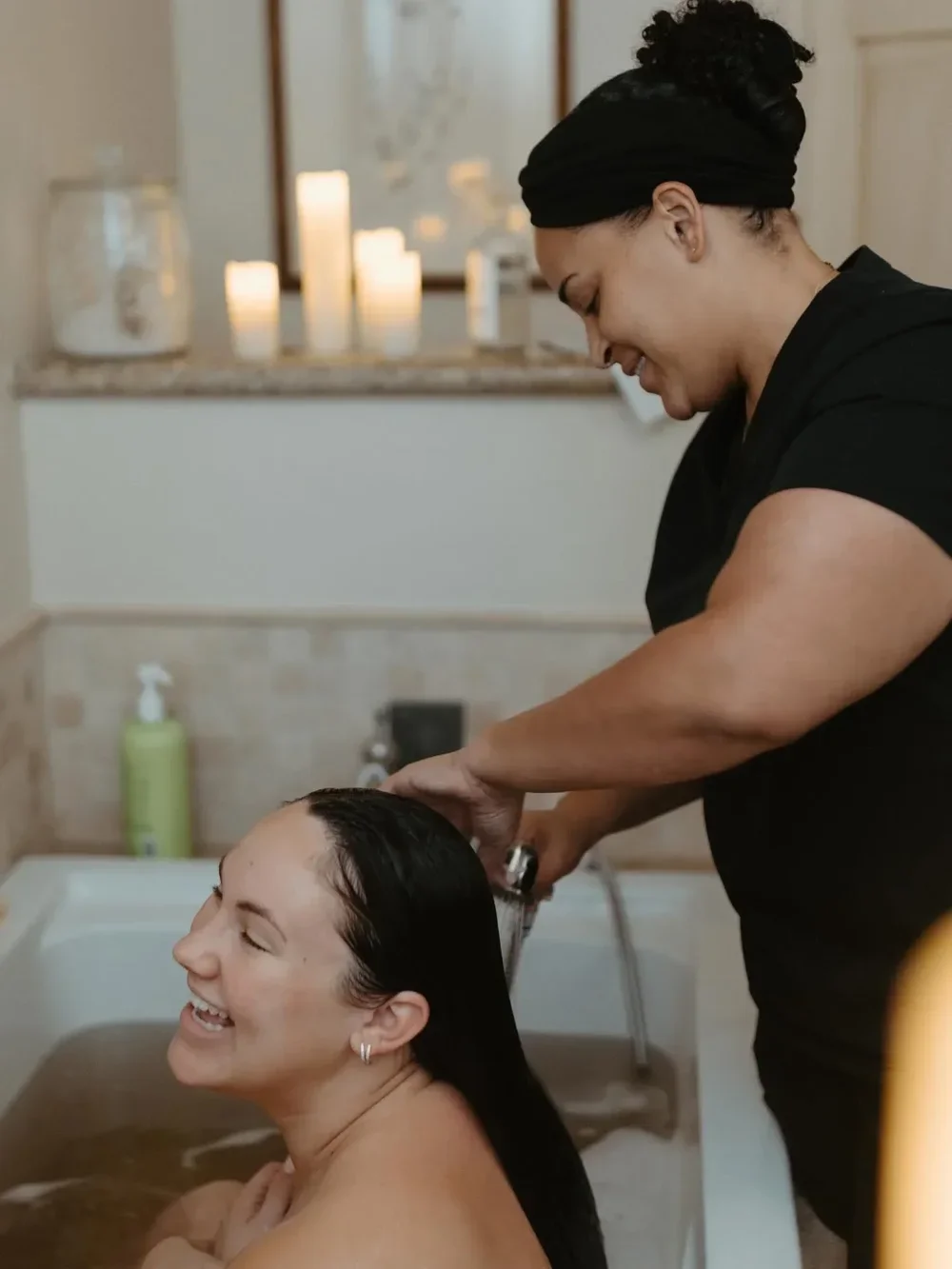
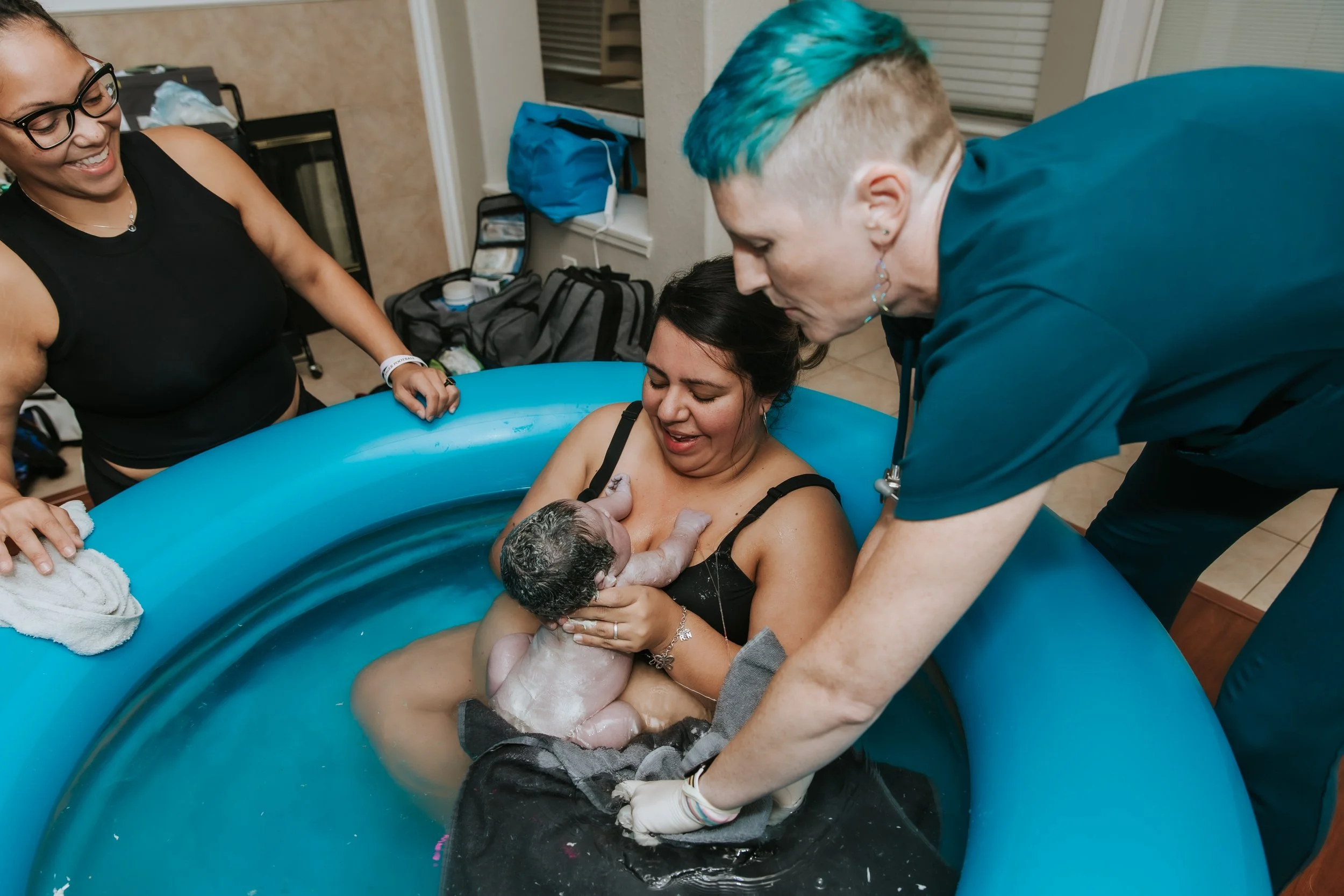
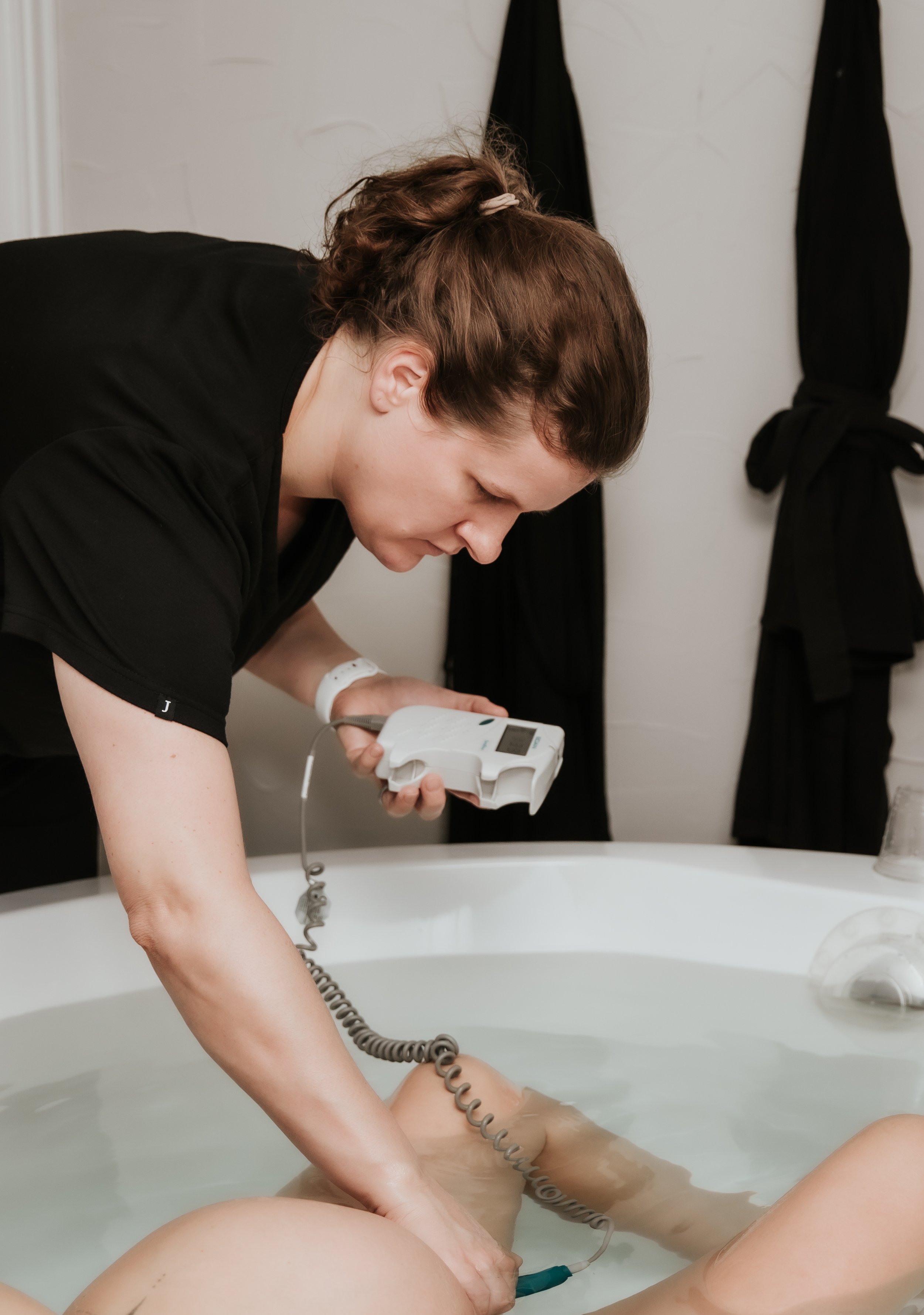
Many families choose to labor or give birth in water during a planned home birth. Warm water can provide comfort, relaxation, freedom of movement, and a calming environment throughout labor.
During your prenatal visits, we'll discuss your preferences, help you prepare for a birth tub if desired, and determine whether water birth is an appropriate option for your pregnancy.
What supplies do I need for a home birth?
We'll provide a detailed supply list well before your due date.
Most items are simple household supplies such as:
Towels
Washcloths
Receiving blankets
Waterproof mattress protection
Postpartum recovery items
If you're planning a water birth, we'll also discuss tub setup and preparation.
More Questions, Answered
-
This is one of the most common questions we hear.
While birth can certainly be messy, our midwives come prepared with protective supplies and equipment to help keep cleanup manageable. Most families are surprised by how little cleanup is actually required and appreciate being able to remain comfortable at home after birth.
-
When labor begins, you'll remain in communication with your midwife while continuing normal activities as much as possible.
As labor progresses, your midwife will help determine when in-person support is needed and will come to your home when the time is right.
Throughout labor, we monitor both mother and baby while providing guidance, encouragement, and support.
-
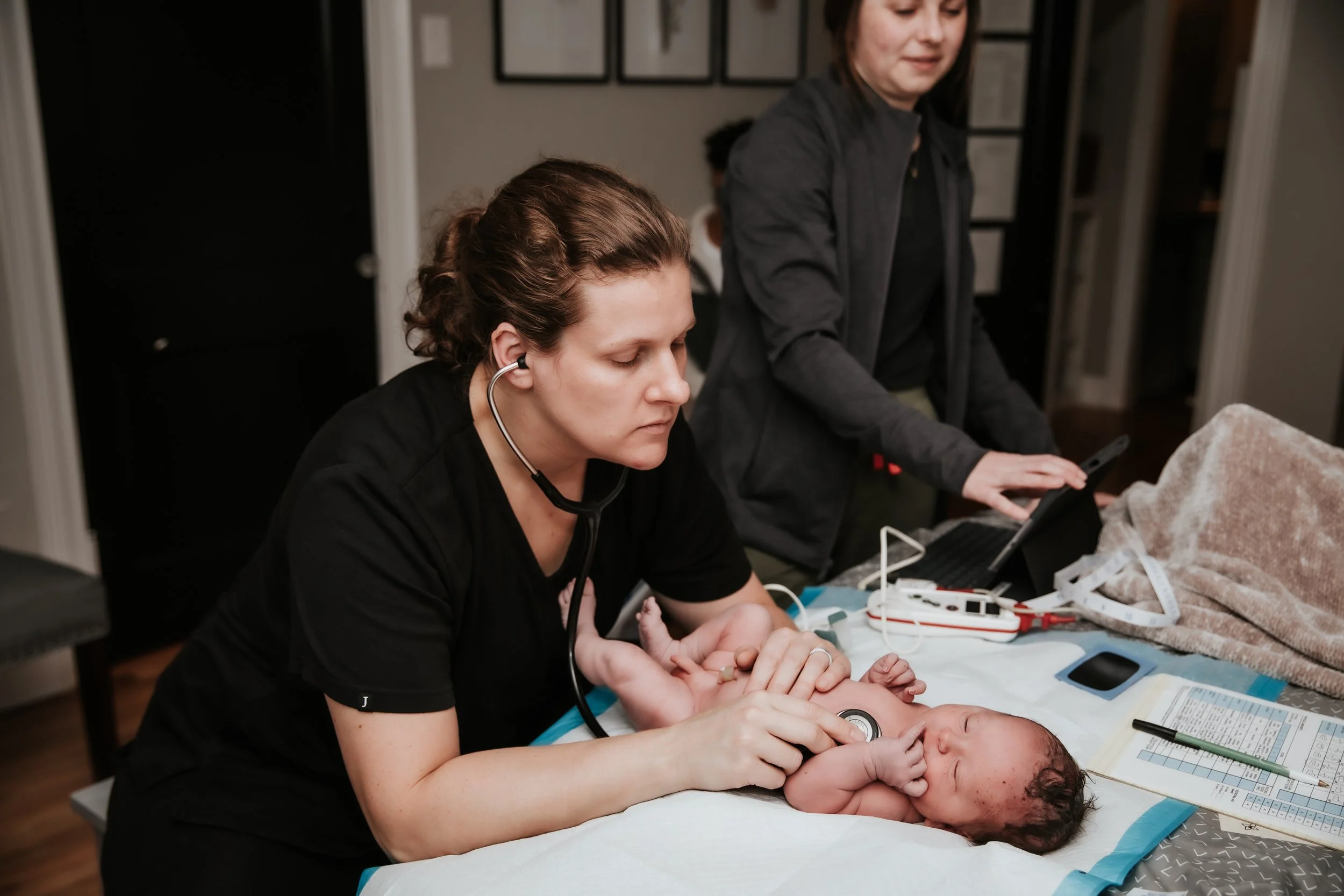
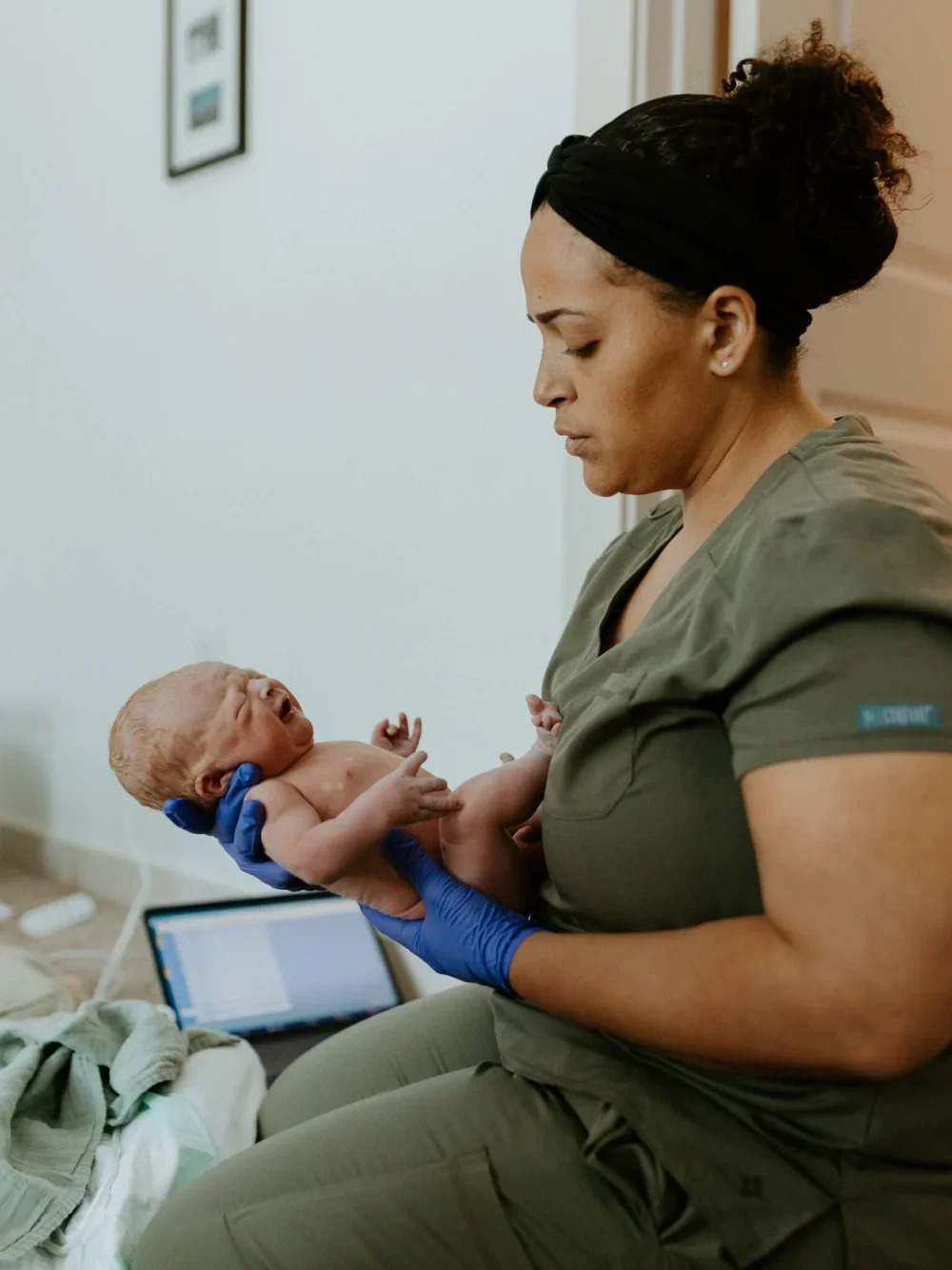
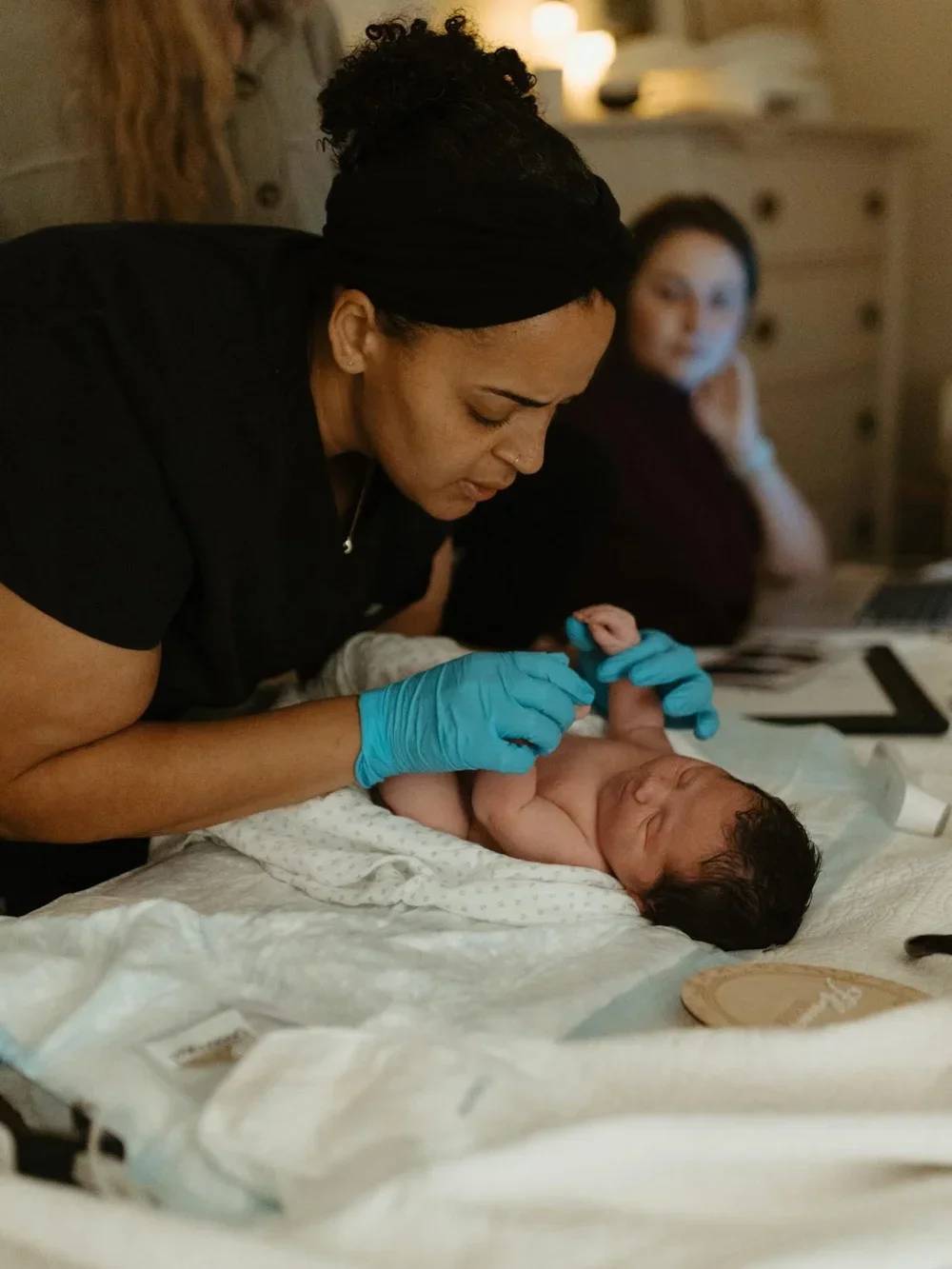
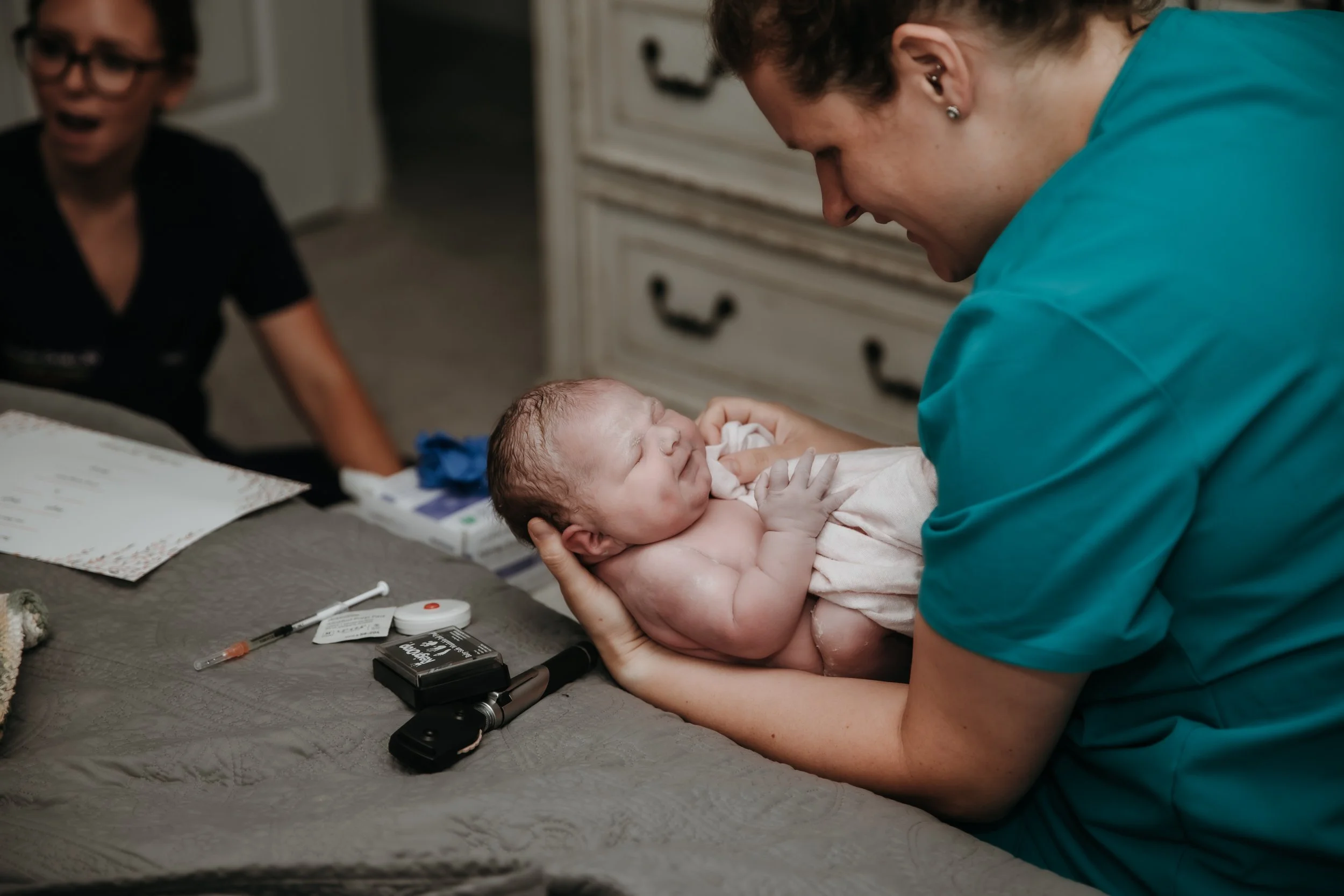
Your midwife remains with your family after birth to monitor recovery, assess your newborn, support feeding, and answer immediate questions.
We want to ensure both mother and baby are stable, comfortable, and transitioning well before we leave.
-
Many families appreciate the opportunity to include siblings in the birth experience.
Children often feel more comfortable in their familiar home environment, and many parents enjoy welcoming a new baby together as a family.
We recommend having a designated support person available whose primary role is caring for older children during labor and birth.
-
Home birth often provides greater flexibility regarding support people than many traditional birth settings.
Families can create an environment that feels comfortable and supportive while maintaining privacy and focus during labor and birth.
-
Birth is a physical and intense experience regardless of location.
Home birth families often use movement, water, massage, position changes, breathing techniques, birth balls, and continuous support to cope with labor.
Many mothers find that being in a familiar environment helps them feel more relaxed and confident throughout the birth process.
-
In most healthy, low-risk pregnancies, families are encouraged to stay hydrated and nourished during labor.
Your midwife will discuss recommendations and help you choose foods and drinks that support your energy throughout the labor process.
-
Midwives carry medical equipment and supplies designed specifically for home birth settings.
This may include equipment for maternal assessment, fetal monitoring, newborn support, medications, oxygen, and emergency response.
Your midwife can discuss specific equipment and protocols during your prenatal visits.
-
Following birth, mother and baby remain together.
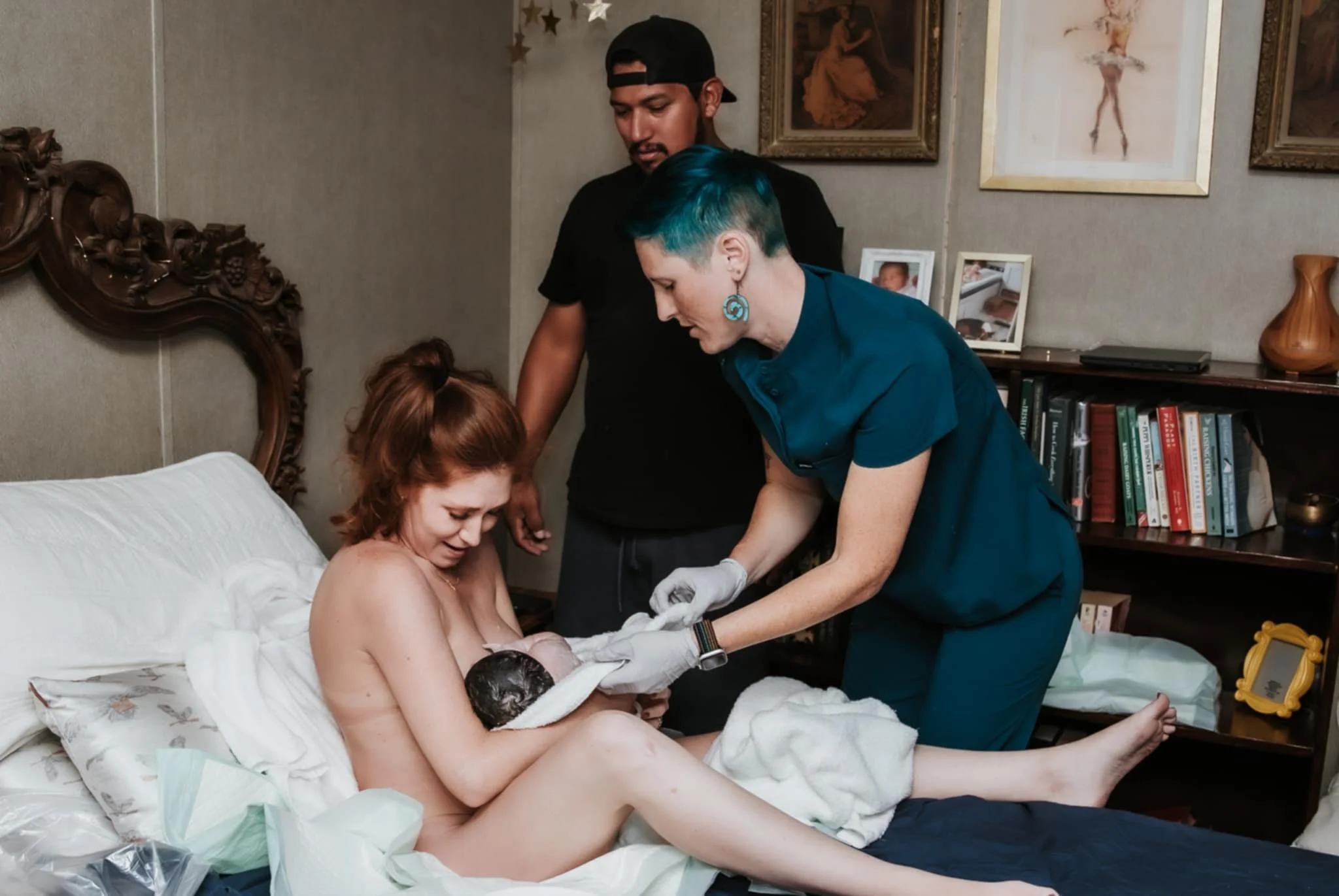
We encourage immediate skin-to-skin contact, bonding, and feeding whenever possible. While you enjoy these first moments with your baby, your midwife continues monitoring recovery and assessing newborn well-being.
-
Yes. Our care doesn't end when your baby is born.
We continue supporting families through postpartum visits, newborn assessments, breastfeeding support, recovery monitoring, and ongoing communication throughout the postpartum period.
Many families tell us this continued support is one of the most valuable aspects of midwifery care.
-
That's perfectly okay.
Some families begin pregnancy planning for a home birth and later decide a birth center feels like a better fit. Others make the opposite decision.
We're happy to discuss both options and help you determine which environment best supports your goals, comfort level, and family needs.
-
The best way to determine whether home birth is right for your family is to schedule a consultation and learn more about your options.
Families who choose home birth often value privacy, comfort, individualized care, and the opportunity to labor and recover in a familiar environment.
Together, we can discuss your goals, answer your questions, and help you determine whether home birth aligns with the experience you're hoping for.
Not what you were looking for? Click here to head back to the main FAQ page.
Related Resources
Still Have Questions?
We would love to meet you, answer your questions, and help you explore your options for pregnancy and birth care.
Schedule a consultation to learn more about midwifery care at Katy Birth Center.