

Frequently Asked Questions About Birth Safety & Emergencies
One of the most common questions families ask when considering midwifery care, home birth, or birth center birth is, "Is it safe?"
At Katy Birth Center, safety is at the heart of everything we do. Safe birth begins long before labor starts. It involves appropriate screening, ongoing prenatal care, careful assessment throughout pregnancy, emergency preparedness, and clear guidelines for when additional medical resources may be beneficial.
Below are answers to some of the most common questions families ask about safety, emergencies, and hospital transfers.
Is home birth safe?
For healthy mothers experiencing low-risk pregnancies, planned home birth with qualified midwives can be a safe option when appropriate screening, prenatal care, and emergency planning are in place.
Throughout pregnancy, your midwife carefully evaluates both maternal and fetal health to determine whether home birth remains an appropriate choice. Safety involves more than where a baby is born. It involves selecting the right birth setting for the right pregnancy and recognizing when additional resources may be beneficial.
Is birth center birth safe?
Birth centers are designed specifically for healthy, low-risk pregnancies and operate with established safety standards and transfer protocols.
Midwives continually assess maternal and fetal health throughout pregnancy and labor. Birth centers are equipped with emergency medications, oxygen, newborn resuscitation equipment, and established plans for hospital transfer if additional medical care becomes necessary.
For many families, birth centers offer a balance between a comfortable birth environment and professional maternity care.
How do you determine whether someone is low-risk?
Risk assessment begins during your first prenatal visit and continues throughout pregnancy.
Factors we evaluate may include:
Maternal health history
Blood pressure
Previous pregnancies
Current pregnancy complications
Baby's position
Gestational age
Multiple gestation status
Medical conditions
Pregnancy is dynamic, which means recommendations can change as new information becomes available.
What happens if I become high-risk during pregnancy?
If a complication develops that requires additional medical resources or specialist care, we'll discuss your options and help coordinate appropriate referrals or collaborative care.
Our goal is never to keep someone in a particular birth setting. Our goal is to help families receive the care that best supports a healthy outcome for mother and baby.
What emergency equipment do midwives carry?
Midwives carry equipment and medications specifically designed to support mothers and babies in home birth and birth center settings.
Depending on the situation, this may include:
Oxygen
Maternal assessment equipment
Fetal monitoring equipment
Emergency medications
IV supplies
Newborn resuscitation equipment
Hemorrhage management supplies
Our team regularly trains and practices emergency response skills to maintain readiness.
Are your midwives trained in emergencies?
Yes.
Midwives receive extensive education and training in recognizing complications, responding to emergencies, newborn resuscitation, maternal stabilization, and coordinating transfers when necessary.
Emergency preparedness is a critical component of safe midwifery care.
More Questions, Answered
-
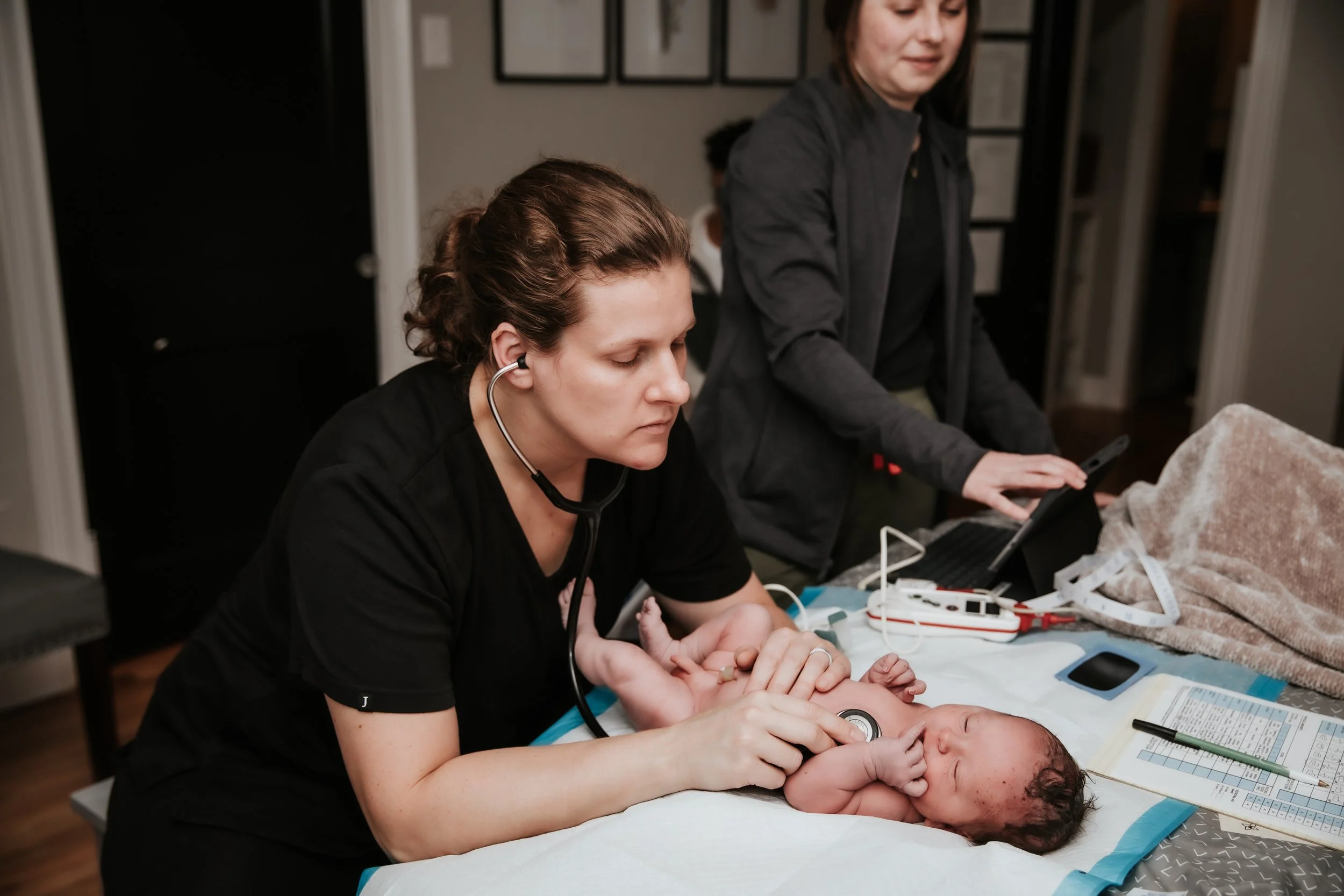
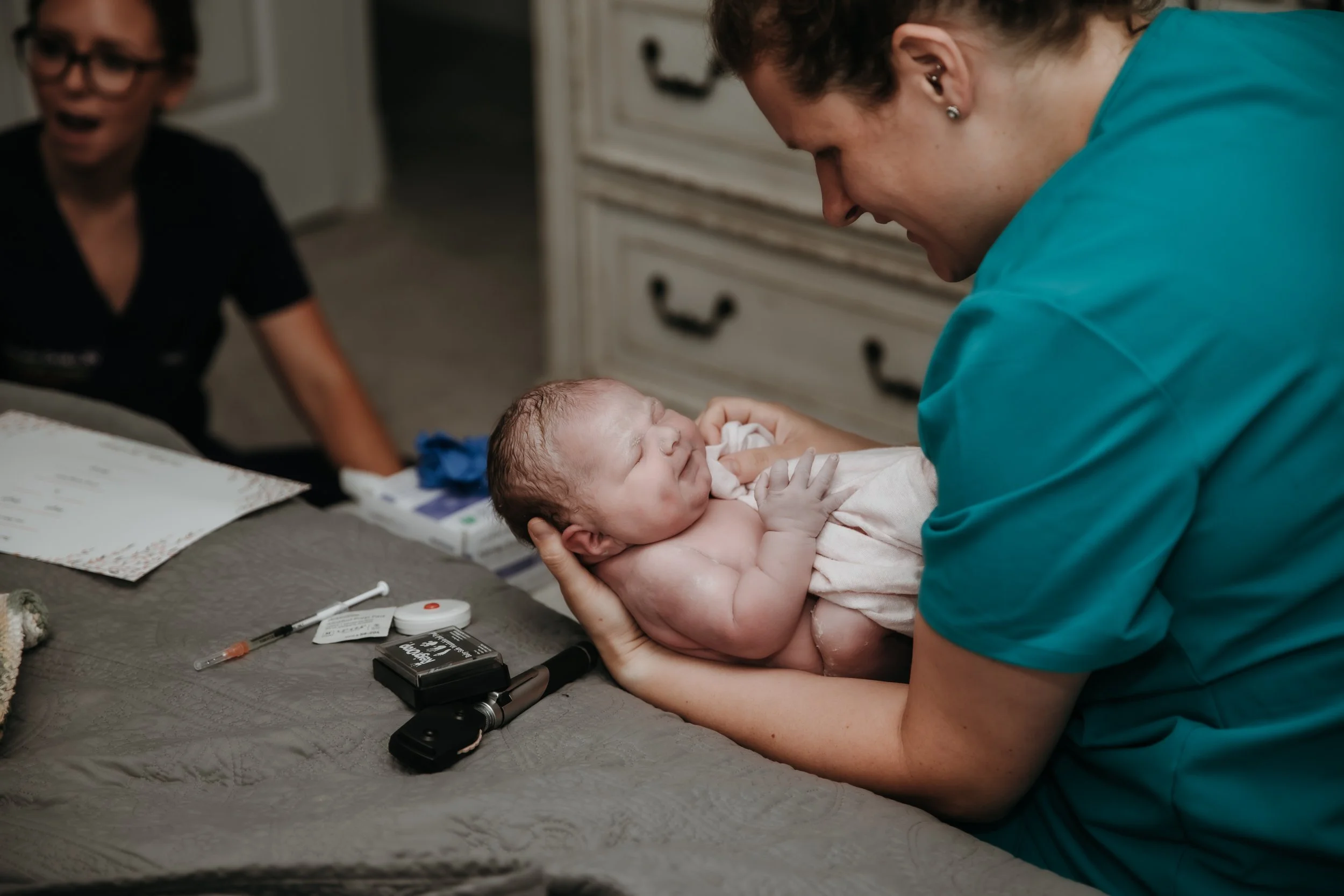
Midwives are trained in newborn resuscitation and carry equipment necessary to provide immediate support if a baby requires assistance transitioning after birth.
Fortunately, most babies make this transition without difficulty. However, preparation and training are essential parts of safe maternity care.
-
Postpartum hemorrhage is one of the emergencies midwives are specifically trained to recognize and manage.
We carry medications, equipment, and supplies designed to help manage bleeding while coordinating additional care if necessary.
Early recognition and prompt response are important parts of safe maternity care.
-
Blood pressure is monitored throughout pregnancy and labor.
If elevated blood pressure becomes a concern, we will discuss recommendations, additional monitoring, referrals, or changes to your birth plan depending on the severity and circumstances.
-
Labor does not always follow a predictable timeline.
When labor progress slows or stalls, we assess multiple factors, including maternal well-being, baby's status, contraction patterns, hydration, rest, positioning, and overall labor progress.
Sometimes patience is appropriate. Other times, additional interventions or evaluation may be beneficial.
-
This situation is not uncommon.
Your midwife will discuss timing, signs of infection, baby's well-being, and available options. Recommendations depend on your individual circumstances and the amount of time that has passed since your membranes ruptured.
-
Babies occasionally remain in a breech position near the end of pregnancy.
If a breech presentation is identified, we'll discuss available options, recommendations, referrals, and whether your planned birth setting remains appropriate.
-
Meconium is a baby's first stool and occasionally appears before birth.
Management depends on the amount, appearance, gestational age, labor progress, and overall assessment of mother and baby.
Your midwife will discuss recommendations based on the specific circumstances.
-
Transfer rates vary depending on the practice and patient population.
First-time mothers generally have higher transfer rates than mothers who have previously given birth.
Many transfers are non-emergent and occur because labor is prolonged, exhaustion develops, pain management preferences change, or additional evaluation becomes beneficial.
-
Absolutely not.
Transfers are an important part of safe maternity care and should never be viewed as failures.
A transfer simply means that circumstances changed and additional resources became beneficial. The goal remains the same: helping mothers and babies receive the care they need.
-
Common reasons may include:
Prolonged labor
Maternal exhaustion
Desire for pain management
Concerns regarding fetal well-being
Elevated blood pressure
Failure to progress
Meconium concerns
Many transfers occur out of caution rather than emergency.
-
Hospital proximity is one factor considered when establishing safe birth center care.
During your consultation, we're happy to discuss transfer procedures, nearby hospitals, and how transfers are coordinated if needed.
-
Cesarean birth is sometimes the safest option for mother, baby, or both.
If circumstances arise that indicate a cesarean may be beneficial, your care will be transferred to a hospital setting where surgical services are available.
Our priority is always helping families achieve the healthiest possible outcome.
-
Yes.
While most pregnancies and births progress normally, emergencies can occur in any setting, including hospitals, birth centers, and homes.
The key to safety is not eliminating all risk. It is recognizing concerns early, preparing appropriately, and responding effectively when unexpected situations arise.
-
Safe midwifery care is built on several important principles:
Appropriate candidate selection
Ongoing risk assessment
Personalized prenatal care
Evidence-based practice
Emergency preparedness
Strong communication
Established transfer plans
Relationship-based care
These foundations help create an environment where families can make informed decisions while receiving attentive, individualized care.
-
The best way to determine whether a particular birth setting is appropriate is through consultation and prenatal care.
We'll review your health history, discuss your pregnancy, answer questions, and continually assess whether your chosen birth setting remains a safe option as your pregnancy progresses.
Safety recommendations are always individualized because every pregnancy is unique.
Not what you were looking for? Click here to head back to the main FAQ page.
Related Resources
Still Have Questions?
We would love to meet you, answer your questions, and help you explore your options for pregnancy and birth care.
Schedule a consultation to learn more about midwifery care at Katy Birth Center.





Our office is conveniently located in Katy, making quality midwifery and birth center care easily accessible for families throughout Katy and the surrounding Houston communities.
Katy Birth Center
1002 Avenue A
Katy, TX 77493